Quick Answer: The real cost of a slow make-ready turn is mostly vacancy loss. Every day a unit sits empty, you lose roughly 1/30th of a month’s rent, plus cleaning, repairs, and marketing. A $1,500 unit turned in 30 days instead of 7 loses about $1,150 in rent alone.
A vacant unit does not announce how much it is costing you. It just sits there, draining rent while the clock runs. The real cost of a slow make-ready turn shows up across your whole portfolio: lost rent, cleaning and repair bills, marketing spend, and the concessions you offer to close the next lease. Most of it is avoidable, and it comes down to one number: days vacant.
What is a make-ready turn, and why does turn speed cost you money?
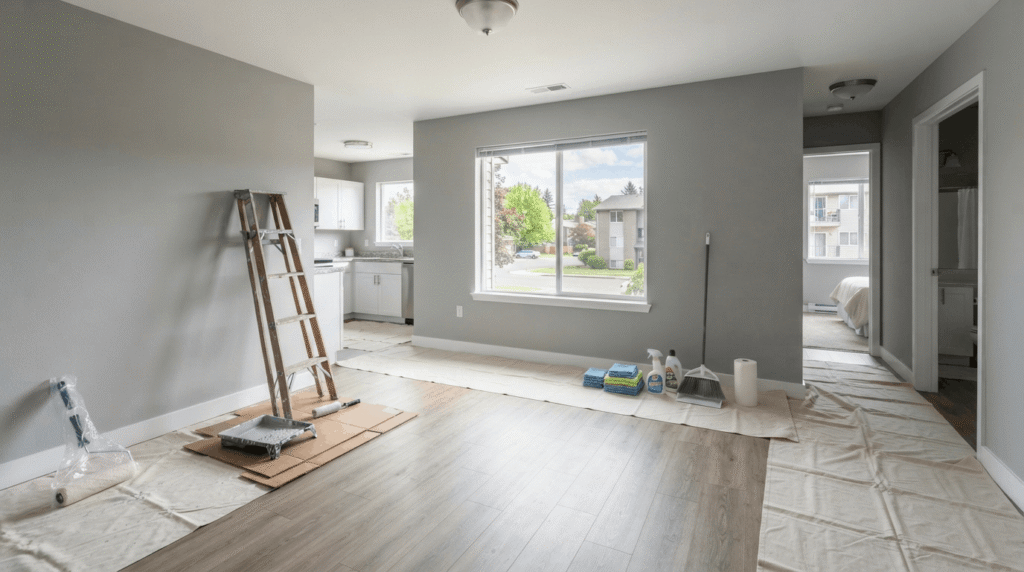
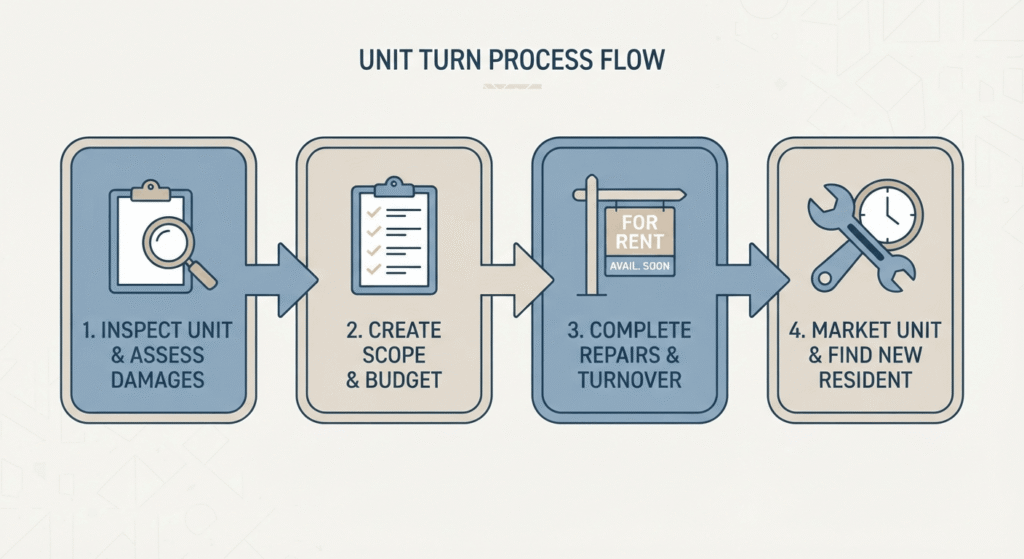
A make-ready turn is the work between one tenant moving out and the next moving in: inspection, cleaning, paint, repairs, and any upgrades needed to lease the unit again. Turn speed matters because a unit earns nothing while it is empty. Every day of downtime is rent you will never bill.
A disciplined maintenance operation turns a standard unit in about a week. A disorganized one lets it sit for a month, waiting on a vendor, a part, or a decision nobody made. Multiply that gap across a year of turns, and you find where the money goes.
How much does a slow make-ready turn cost in vacancy loss?
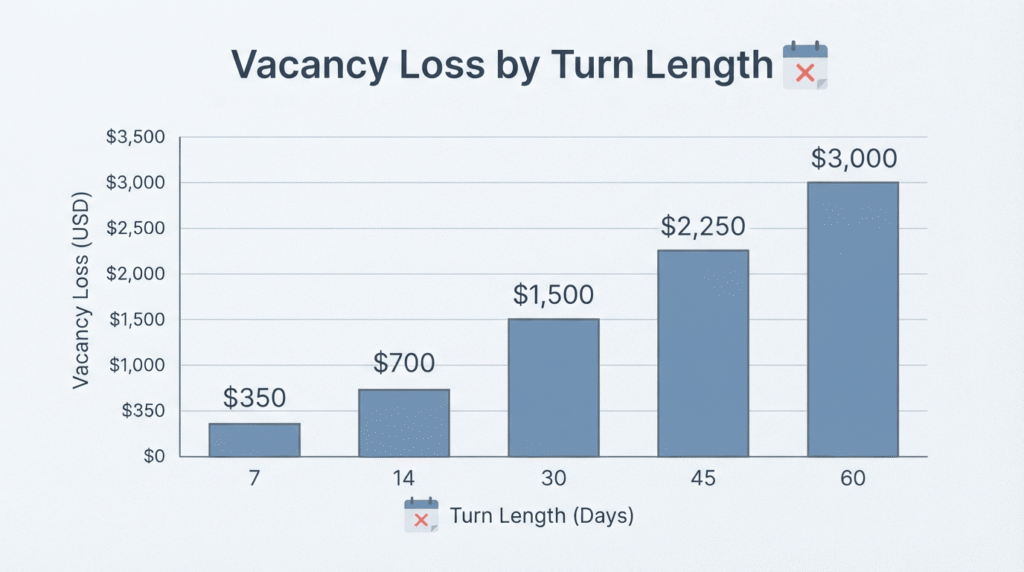
Vacancy loss is the rent you forfeit while a unit sits empty, usually the single largest cost of any turn. Take the monthly rent, divide by 30, and you have the daily bleed. At $1,500 a month, that is about $50 a day, so a 30-day turn instead of a 7-day turn costs roughly $1,150 in lost rent alone.
Here is how vacancy loss scales on that $1,500 unit as the turn drags on:
| Turn length | Days vacant | Vacancy loss (at ~$50/day) | Extra cost vs a 7-day turn |
|---|---|---|---|
| 7 days | 7 | $350 | Baseline |
| 14 days | 14 | $700 | $350 |
| 30 days | 30 | $1,500 | $1,150 |
| 45 days | 45 | $2,250 | $1,900 |
| 60 days | 60 | $3,000 | $2,650 |
Now add the direct work. Industry benchmarks put a standard apartment turnover near $3,000 to $5,000 per move-out once cleaning, paint, repairs, marketing, and leasing are folded in, and the National Apartment Association’s 2024 data shows those costs climbing year over year. Most of that increase is not labor, it is lost rent. Trim a vendor’s price and it barely moves the total; cut two weeks off the turn and it does. Most routine turn work also counts as a repair, and IRS guidance on rental income and expenses treats those costs as deductible in the year you pay them.
What drives tenant turnover and longer turn times?
Tenant turnover is driven by more than rent hikes. Slow maintenance, patchy repairs, and units that feel neglected push residents to leave, and the same disorganization that annoys a current tenant is what stretches the next turn. Turnover and turn time share a root cause: operations that react instead of plan.
National apartment turnover rate estimates run high, commonly cited between 40% and 60% a year, so a 100-unit community sees 40 to 60 move-outs annually. Each one is a rental turnover event that either closes in a week or drifts. A turn drifts for predictable reasons: a move-out inspection done after the tenant leaves instead of 30 days before, a vendor who cannot start for two weeks, or a repair-versus-replace call nobody makes. Rental property turnover that runs long on one unit tends to run long on all of them, because the bottleneck is the process. Roughly 80% of moves happen from May through August, so handling lease turnover the same way in July as in January costs you the year’s best leasing weeks.
How does apartment turnover rate affect your occupancy rate?
Your apartment turnover rate and your occupancy rate are two sides of the same coin. Every turn drops a unit out of your occupied count for as long as the make-ready takes, so a high turnover rate paired with slow turns quietly caps the occupancy you can actually achieve, no matter how strong demand looks on paper.
Context helps. The national rental vacancy rate was 7.3% in the first quarter of 2026, according to the Census Bureau’s Housing Vacancy Survey, the loosest rental market in several years. When more units sit available, renters have options, and a half-finished listing loses to the move-in-ready unit down the street. A single apartment turnover bundles several costs, but the occupancy hit compounds. Say two units turn each month at a 100-unit property and each runs 21 days long. That is about 500 extra vacant-unit-days a year, roughly the same as keeping 1.4 units permanently empty. Your occupancy reads 93% when it could read 95%. That gap is pure operational drag, which is why live owner reporting tracking days-vacant per unit matters.
Speeding up turns to lower your property management cost
Cutting turn time is the most effective way to lower the true property management cost of a rental, because it attacks the largest and most controllable cost: lost rent. A good turn is not about rushing crews. It is about removing the waits that stack vacant days onto every unit.
A few moves do most of the work:
- Inspect early. Walk the unit 30 days before the lease ends to scope repairs and order parts before the tenant is out.
- Standardize the scope. Run every turn through the same checklist so crews are not waiting on decisions about paint, flooring, or fixtures.
- Pre-list the unit. Market it as coming soon while work finishes, so a signed lease is ready the day the unit is.
- Line up responsive vendors. A trade that starts same-day beats a cheaper one that starts in two weeks.
Signing the next lease early is a leasing problem as much as a maintenance one, so pairing your leasing and marketing effort with the turn schedule closes the gap between unit-ready and rent-flowing. One lever sits in the tax code: IRS Publication 527 makes you capitalize improvements and depreciate them over 27.5 years, while routine repairs are deducted now, so tracking that split per turn keeps the real cost honest.
Frequently asked questions
1. How long should an apartment make-ready turn take?
Best-practice benchmarks put a standard unit at 5 to 7 days from move-out to show-ready, though 14 days is a common industry average. Older units or heavy make-ready work run longer, and in soft rental markets re-leasing can stretch to 45 or 60 days.
2. How do you calculate vacancy loss on a rental?
Divide the monthly rent by 30 for the daily rent, then multiply by the days a unit sits empty. A $1,500 unit vacant 21 days loses about $1,050. Add cleaning, repairs, marketing, and any concessions to reach the full turnover cost.
3. What is a normal apartment turnover rate?
National estimates commonly land between 40% and 60% a year for apartments, so many residents move annually. Urban markets tend to run higher than suburban ones. Your own rental turnover depends on screening, renewal outreach, and how well maintenance keeps units in shape.
4. Does a slow make-ready turn really affect my occupancy rate?
Yes, and it compounds. Slow turns hurt occupancy three ways:
- Every extra vacant day keeps a unit out of your occupied count.
- Half-finished units lose showings to move-in-ready competitors.
- Missed spring and summer weeks are the hardest to recover.
5. Are make-ready and turnover costs tax deductible?
Often, but it depends on the work. Routine repairs like cleaning, patching, and paint are generally deductible the year you pay them. Improvements that add value or extend a unit’s life must be capitalized and depreciated over 27.5 years under IRS rules.
Conclusion
The real cost of a slow make-ready turn is not the paint or the cleaning crew. It is the rent you never collected while the unit sat waiting on a process that was not built for speed. Shave the vacant days and most of the cost disappears on its own. If your turns run long and you cannot see exactly where the days go, a full-service property management team that treats turn time as a number to manage is where the recovery starts.