
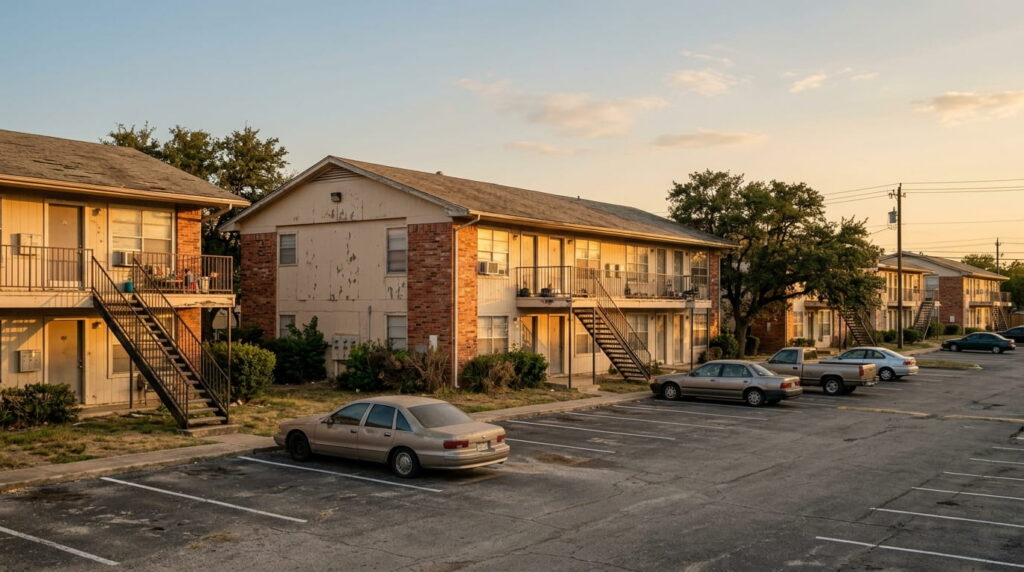
Quick Answer: Taking over a distressed asset works best as three 30-day phases. Days 1 to 30 verify the rent roll, the cash and the physical condition. Days 31 to 60 clear safety repairs and price the deferred maintenance. Days 61 to 90 produce a budgeted turnaround plan the owner and lender can approve.
Taking over a distressed asset is rarely a clean handoff. Vendors are owed money, and the rent roll describes a building that doesn’t quite exist. The first 90 days decide whether the owner is working from facts or from the last operator’s assumptions.
What Does Taking Over a Distressed Asset Involve?
Taking over a distressed asset means assuming control of a property that is underperforming its debt, its budget or its physical standard, either as a new owner or as a new manager hired by the existing owner or lender. In the first quarter, diagnosis comes before spending.
A distressed property usually shows two symptoms together: occupancy that looks fine on paper but doesn’t collect, and a backlog of repairs nobody has priced.
Why distressed real estate is changing hands in 2026
More distressed real estate is reaching new operators this year because debt and vacancy are both working against weak properties. The FDIC’s Quarterly Banking Profile put the past-due and nonaccrual rate on multifamily loans at 1.41% in the second quarter of 2026.
Vacancy adds pressure. The Census Bureau’s Housing Vacancy Survey reported a 7.3% national rental vacancy rate for the same quarter, and 9.5% in the South.
Days 1 to 30: Property Audit and Rent Roll
The first 30 days are for verification. The incoming team secures the bank accounts, keys and system logins, then checks every number the prior operator reported against what is physically on site. Nothing gets repriced or renovated yet, because the baseline isn’t known.
Start with a property audit
A property audit is a unit-by-unit walk paired with a document review. Every unit gets opened, including the occupied ones, with proper notice under the lease and state law. The walk sorts each unit as rent-ready, needing a make-ready, or down. It also turns up what no report shows, such as unauthorized occupants and units stripped of appliances.
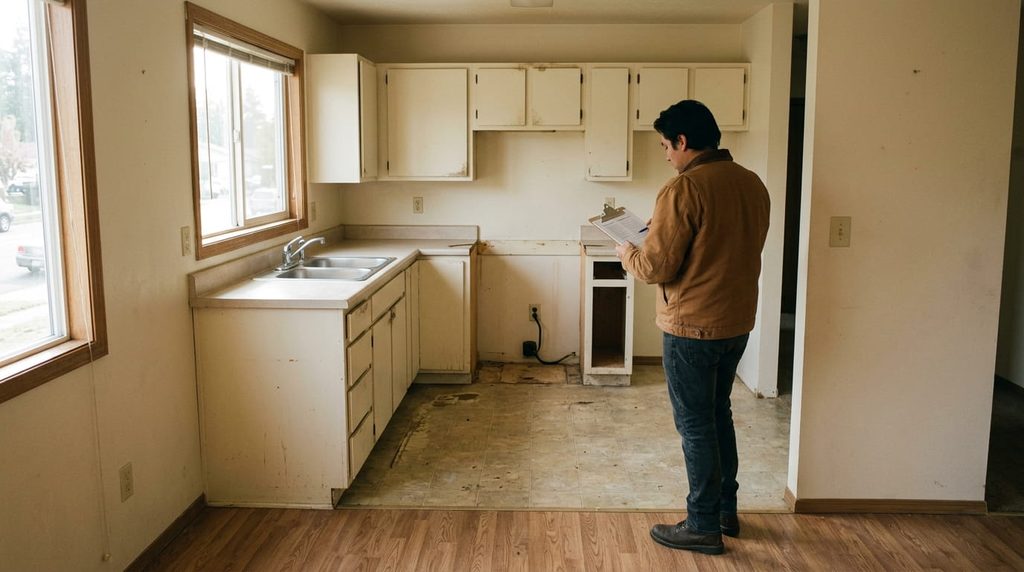
On the document side, collect the last 12 months of general ledger, open payables, vendor contracts, permits and inspection reports. Unpaid vendors matter most. A plumber who is owed for four months won’t answer an emergency call.
Rebuild the rent roll from the leases
The rent roll is where taking over a distressed asset most often goes wrong. Treat the inherited version as a claim to be tested, and match each line to a signed lease, a ledger and a person living in the unit.
Take a modeled 200-unit community. The roll shows 170 occupied units, or 85%. The audit finds 12 of those households haven’t paid in 60 days or more. Paying occupancy is 158 units, or 79%, and at $1,100 average rent that is $13,200 a month the report counts but the bank never sees.
That gap sets the collections workload. A written policy for delinquency and bad debt should be in place before the first notices go out, applied the same way to every resident.
Days 31 to 60: Deferred Maintenance and the Renovation Plan
The second month turns the audit into a priced list. Deferred maintenance is ranked by risk to residents first and by effect on leasing second, and every item gets a cost and a date. This is when taking over a distressed asset starts to cost money, so the order of spending matters.
Triage deferred maintenance by risk
HUD’s inspection standard is a useful yardstick, even at properties with no HUD involvement. Under the NSPIRE standards, HUD-assisted housing must correct life-threatening and severe deficiencies within 24 hours, moderate ones within 30 days and low ones within 60 days. Sorting a conventional backlog the same way puts life-safety repairs ahead of cosmetic work.
Older buildings add a federal rule. In housing built before 1978, EPA’s Renovation, Repair and Painting Rule requires that work disturbing painted surfaces be done by a Lead-Safe Certified firm. Check the year built before any crew starts scraping.
Then rebuild the routine. A maintenance program with tracked work orders and scheduled preventive checks keeps the backlog from regrowing while the big repairs are underway.
Scope the renovation plan before spending
A renovation plan written in month two should be short. List the down units, the cost to return each to service and the rent each will earn. Units that pay back fastest go first.
Tax treatment belongs in the plan too. The IRS tangible property regulations treat amounts paid to fix a material condition that existed before acquisition as a betterment, which is capitalized instead of expensed as a repair. A buyer’s CPA should review the scope before the work is coded.

Days 61 to 90: Turnaround Plan and Asset Management Reporting
By day 61 the team knows what the property collects, what it needs and what that costs. The third month puts those findings into a turnaround plan with a 12-month budget, a unit-by-unit schedule and a reporting rhythm the owner’s asset management team can hold the operator to.
A turnaround plan for distressed assets should fit on a few pages. It states current paying occupancy, the target, the capital required by quarter and the monthly checkpoints. Larger scopes need capital project oversight with bids and draw schedules attached.
Lenders read this document closely when a new operator is taking over a distressed asset. If the loan documents set reporting dates, those dates drive the calendar.
The table below summarizes the transition plan for taking over a distressed asset, phase by phase.
| Phase | Main work | What the owner receives |
|---|---|---|
| Days 1 to 30 | Secure accounts and access, property audit, rent roll rebuild | Verified rent roll and unit condition report |
| Days 31 to 60 | Safety repairs, deferred maintenance pricing, renovation scope | Priced repair list and renovation plan |
| Days 61 to 90 | Budget, leasing targets, reporting calendar | Turnaround plan and 12-month budget |
| After day 90 | Carry out the plan and report monthly | Monthly variance report against the plan |
Frequently Asked Questions
1. What is the first step in taking over a distressed asset?
Control of money and access comes first. Open new bank accounts, change signers, collect keys and reset system logins on day one. Then begin the unit walk and the lease file review, so every later decision rests on verified numbers.
2. How long does it take to stabilize a distressed property?
Ninety days after taking over a distressed asset is enough to diagnose the distressed property and approve a plan. It is rarely enough to finish one. Unit renovations, collections and leasing of repaired units run past the first quarter, and the timeline depends on how much capital the owner can commit.
3. What should a transition plan include for a distressed asset?
A transition plan for taking over a distressed asset should cover these items before the takeover date:
- Bank accounts, signers and security deposit transfer
- Rent roll, leases, ledgers and the aged delinquency report
- Open payables, vendor contracts and insurance certificates
- Keys, access codes, permits and inspection reports
- Resident notice of the management change, with new payment instructions
4. How is asset management different from property management on a distressed asset?
Asset management sets the investment decisions: how much capital to commit, whether to refinance and when to sell. Property management runs the site day to day, including leasing, collections and repairs. The two meet in the monthly report, where the manager’s numbers test the asset manager’s plan.
5. Should rents be raised right after taking over a distressed asset?
Usually not in the first 30 days. A rent increase at a property with open repairs and unverified ledgers invites move-outs and disputes. Fix life-safety items, confirm what each household owes, then reprice renewals once the units justify it.
Conclusion
Taking over a distressed asset is a 90-day exercise in replacing assumptions with verified numbers: who pays, what is broken and what the fix costs. Hold major spending until the audit is finished, because every budget line after day 30 depends on it. AAM Living provides third-party property management for multifamily owners.